Los Angeles  ·  Hong Kong  ·  Est. 1982

Some cargo cannot be replaced.

We have carried one-of-one freight across the Pacific for four decades. Collector automobiles, pre-production prototypes, diagnostic systems, flight hardware. Never in volume. Only in full custody.

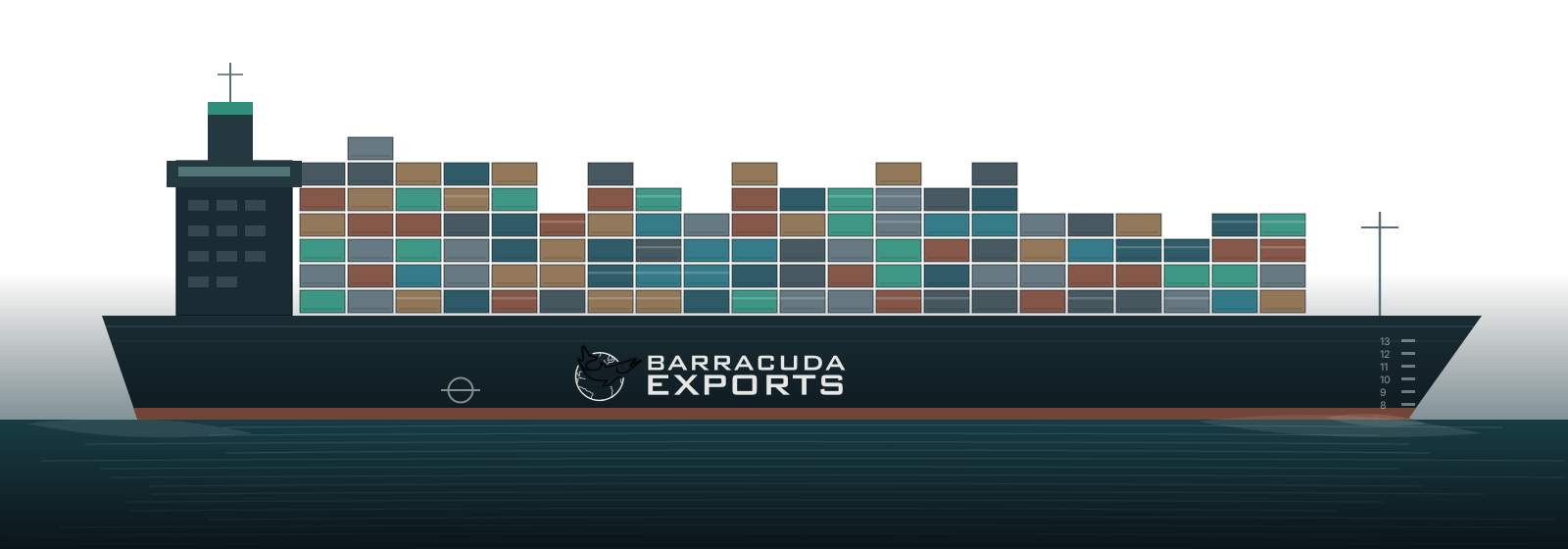
A Barracuda Exports container vessel under way, seen from the starboard side, with the company mark on the hull
Founded
1982 — San Pedro
Home ports
POLA  /  Kwai Tsing
Sailings
24 per year
Cargo classes
Four. No others.

02 — The house

A small house, on purpose.

Barracuda Exports was founded in San Pedro in 1982 with one chartered vessel and a single customer who needed a racing car in Yokohama by March. We are still family-owned, now in the second generation, and we still take that call personally.

Scale was available to us and we declined it. A carrier moving forty thousand boxes a week cannot know what is inside any of them, and cannot stop the ship when one of them matters. We sail fewer containers in a year than a mainline operator sails in a morning, and we know the contents of every one.

The Hong Kong office opened in 1989. In 1994 we acquired Wang Ltd. Containers, which remains our container operation in Kwai Tsing and the reason we control our own equipment rather than renting it from whoever has a box free.

44
Years under the same family
2
Ports of registry
0
Total-loss claims since 1997
1:1
Surveyor to consignment

04 — Cargo classes

Four things, carried properly.

Every class below has its own cradle design, its own insurance schedule, and its own surveyor. We do not carry general freight, and we will tell you plainly when a consignment belongs with someone else.

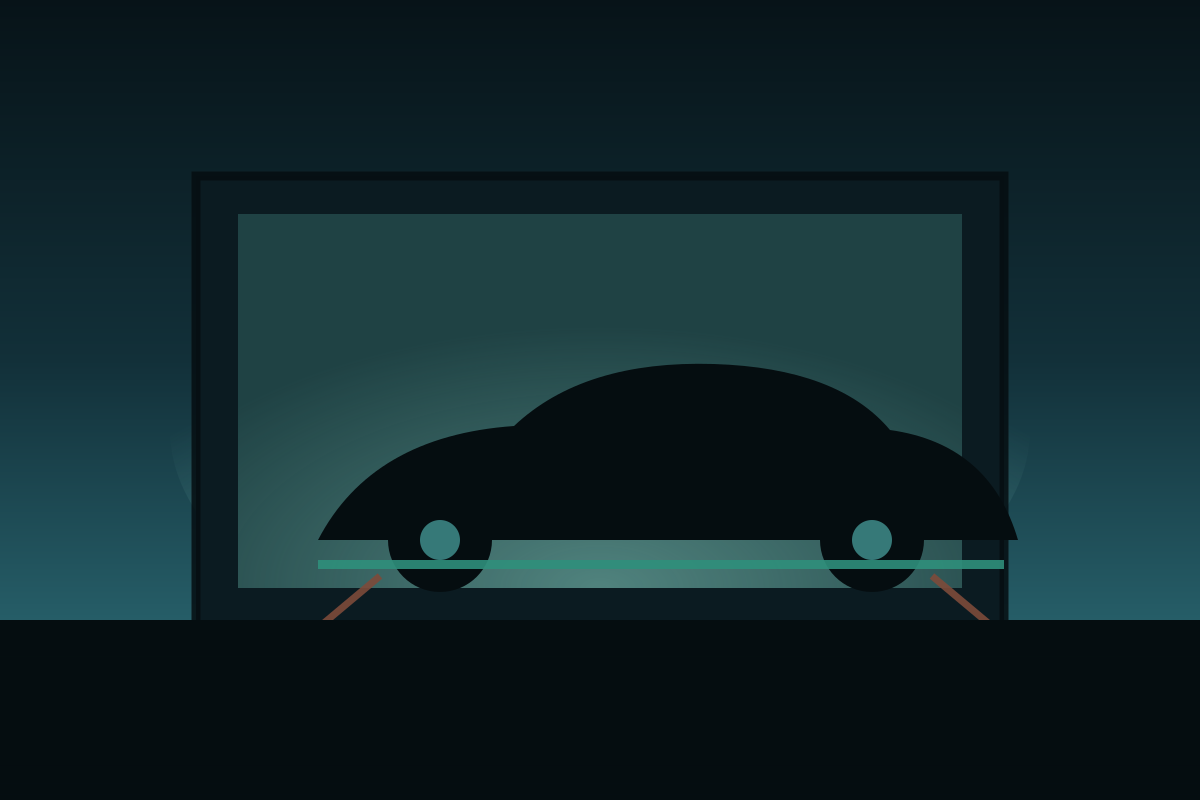
A low-slung automobile secured on a cradle inside a lit shipping container

Class 01

Collector & competition automotive

Pre-war coachwork, homologation specials, factory race cars, and the occasional car that has never been titled anywhere. Each vehicle travels in a dedicated container on a bespoke cradle, strapped at the chassis rather than the suspension, fluids managed to the consignor's instruction.

  • Single vehicle per container, never consolidated
  • Soft-tie cradles built to the chassis drawing
  • Photographic condition record at seal and at break
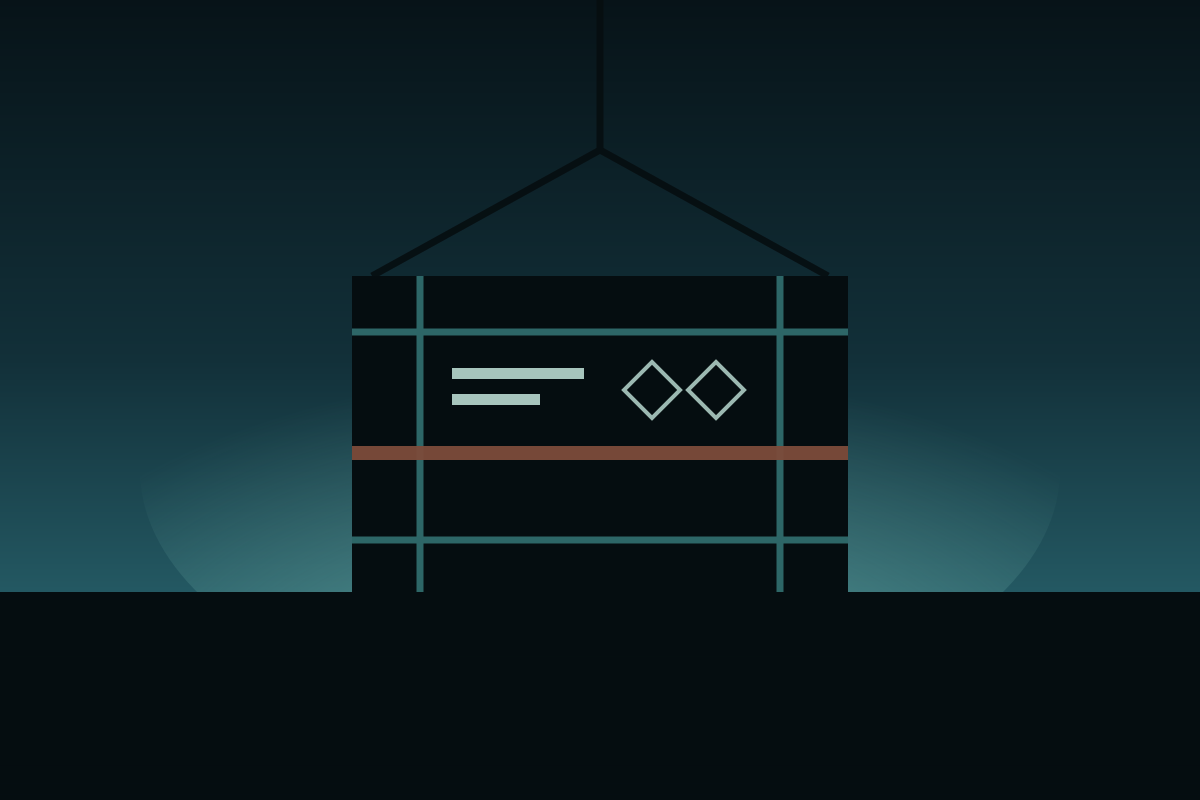
A sealed crate suspended on slings beneath a gantry

Class 02

Prototype & pre-production

Tooling, first articles, and equipment that exists in a quantity of one. This is the class where confidentiality matters as much as handling: manifests are abstracted, crates carry no maker's marks, and the number of people who know what is in the box stays deliberately small.

  • Abstracted manifests and unbranded crating
  • Shock and tilt recorders on every unit
  • Non-disclosure extended to port agents and hauliers
A refrigerated container fitted with a monitoring panel showing a temperature trace

Class 03

Medical & diagnostic systems

Imaging gantries, surgical robotics, cryogenic assemblies and calibrated instruments that arrive useless if they arrive shaken. Reefer and controlled-atmosphere equipment is our own, monitored continuously, with a power path that survives a terminal outage.

  • Continuous temperature and humidity logging
  • Redundant power on every controlled unit
  • Calibration certificates carried with the consignment
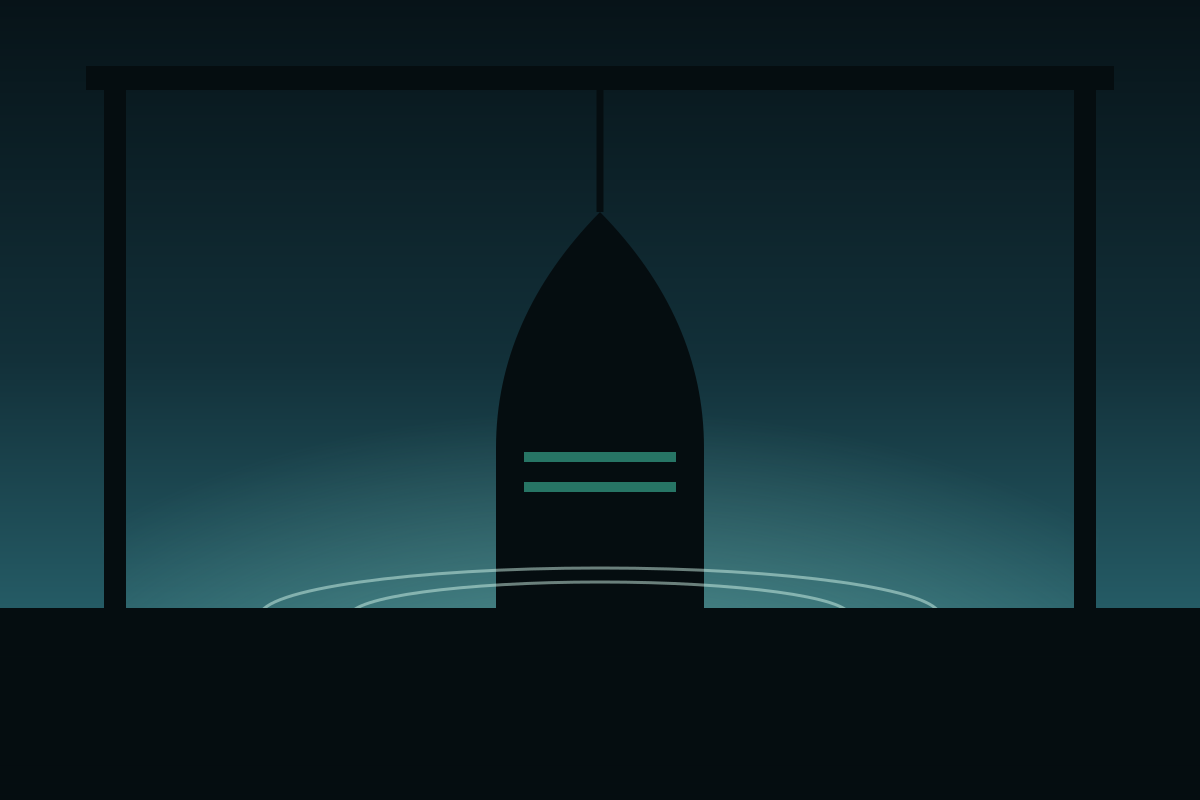
A payload fairing suspended beneath a gantry frame

Class 04

Aerospace & orbital payloads

Structures, propulsion components, optics and flight hardware moving to integration. Cleanliness classification is maintained from the consignor's floor to the receiving bay, and export control paperwork is prepared before the container is ever positioned.

  • Cleanroom-compatible bagging and purge
  • ITAR and dual-use documentation handled in house
  • Escorted movement between gate and berth

06 — Chain of custody

One name on the consignment, end to end.

Most losses do not happen at sea. They happen in the handovers — a yard, a subcontracted haulier, a night shift that was never told what it was lifting. We remove the handovers.

  1. Stage 01

    Survey

    A surveyor attends the item where it stands, before anything is quoted. Dimensions, mass, fragility, and the honest answer to whether we are the right carrier.

  2. Stage 02

    Cradle

    Crating and cradles are built for the object, not ordered from a catalogue. Drawings are approved by the consignor before a single piece of timber is cut.

  3. Stage 03

    Passage

    Under-deck stowage, always. Position, temperature and shock data are available to the consignor for the whole crossing, not summarised afterwards.

  4. Stage 04

    Release

    Seals are broken in the presence of the consignee and our own agent. Condition is recorded against the departure record before anyone signs anything.

A row of ship-to-shore gantry cranes silhouetted against a lit terminal at night

08 — Network

Two ports, both of them ours.

We work one lane and we work it deeply. San Pedro Bay to Kwai Tsing, west and east, on a published schedule that has not been missed since 2019.

POLA

Los Angeles

Berth 148, Terminal Island
San Pedro, California 90731

Head office, marine survey, and the crating shop.

HKG

Hong Kong

Kwai Tsing Container Terminals
Kwai Chung, New Territories

Operated with Wang Ltd. Containers, our subsidiary since 1994.

09 — Affiliations

Our subsidiary, our accrediting body, and the agents who represent us in ports we do not call at ourselves.

  • Wang Ltd. Containers, a Barracuda Exports company
  • United Shippers Association
  • Optumtrans
  • Marske Logistics
  • Lau IPS International
  • Starliner Global LLC

10 — Enquiries

Tell us what it is and where it has to be.

Every enquiry is read by a surveyor, not a sales desk. If your consignment is better served by a mainline carrier we will say so, and we will tell you who to call.